BEFORE PRODUCTION
Selection → BV lab test → US & EU criteria → Release → Traceable batch
01
Raw material & safety release
All raw materials and rubber chemicals are sourced pharma grade and non-toxic. Each batch is lab tested by Bureau Veritas before it enters production.
02
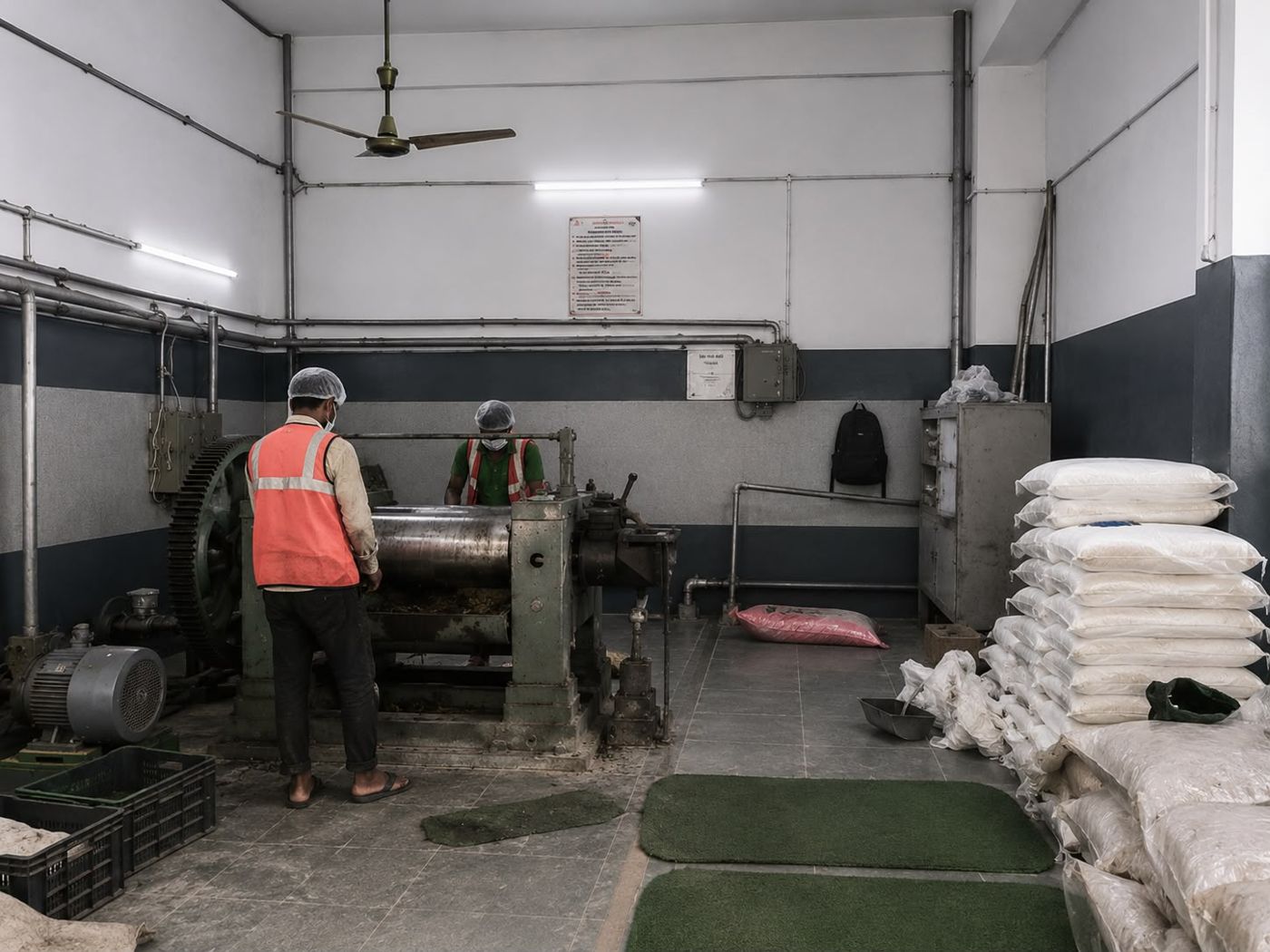
Rubber mixing
Natural rubber is mixed with zinc oxide, stearic acid, sulphur, calcium compounds and other ingredients, then sheeted for moulding.
03
Vulcanisation & metal detection
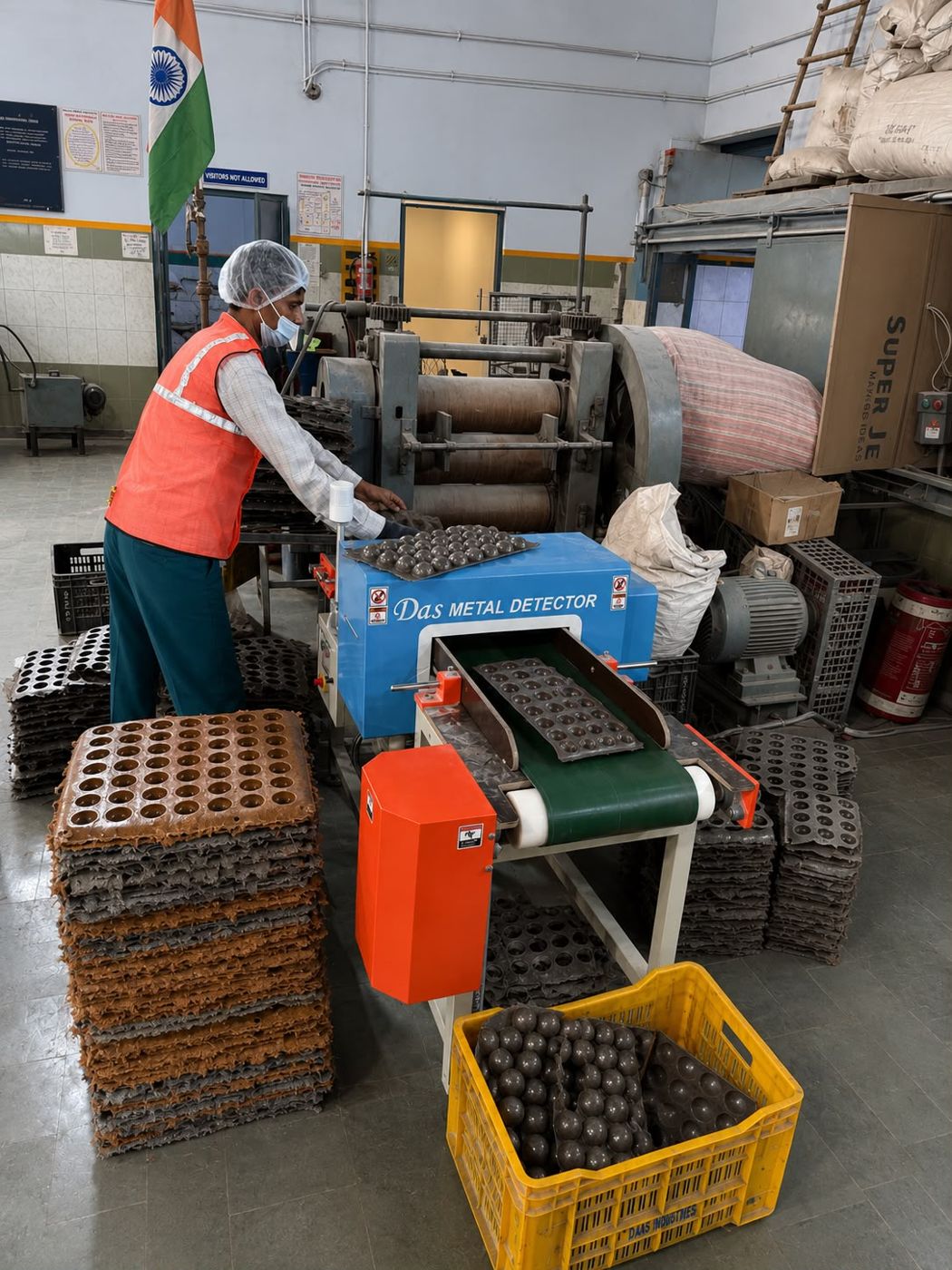
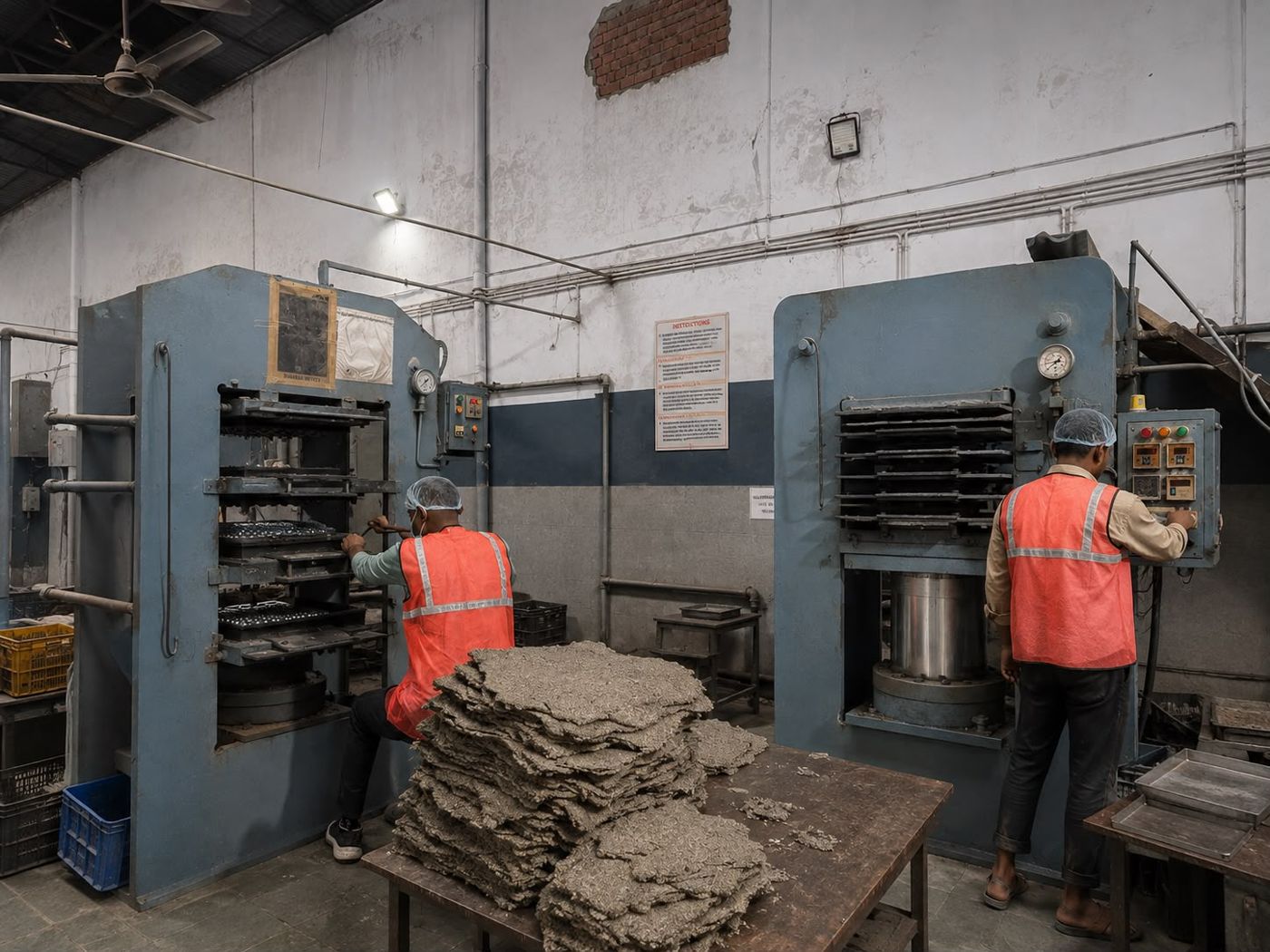
Hot steam and high pressure form the sheet into ball cups. Every cup sheet then passes through a conveyor metal detector.
04
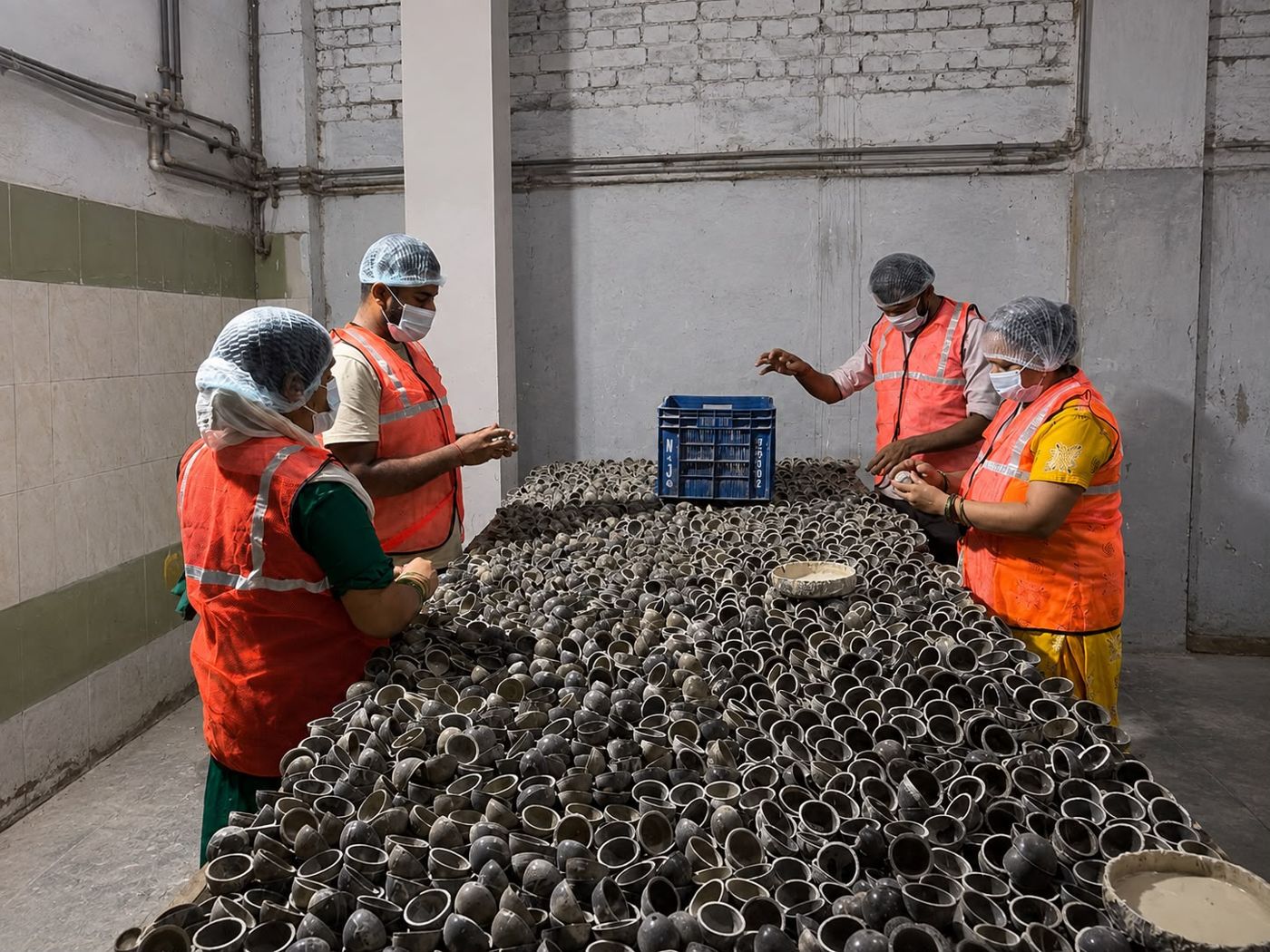
Cup joining
Cup edges are ground for a rough bonding surface, adhesive is applied and two cups are joined into a hollow core.
05
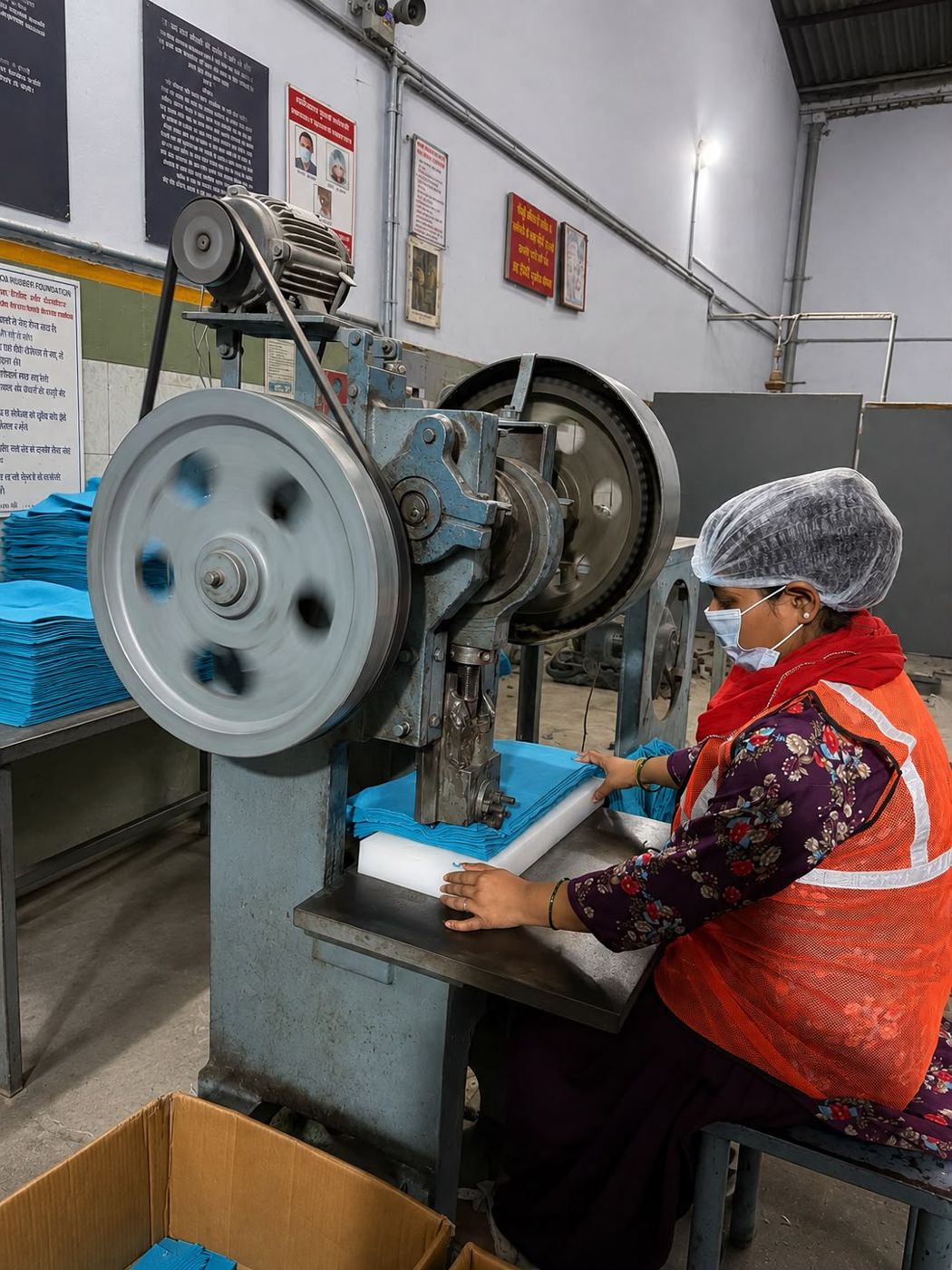
Felt cutting
Adhesive is applied to the back of the felt, which is then die-cut into the panels for each ball size.
06
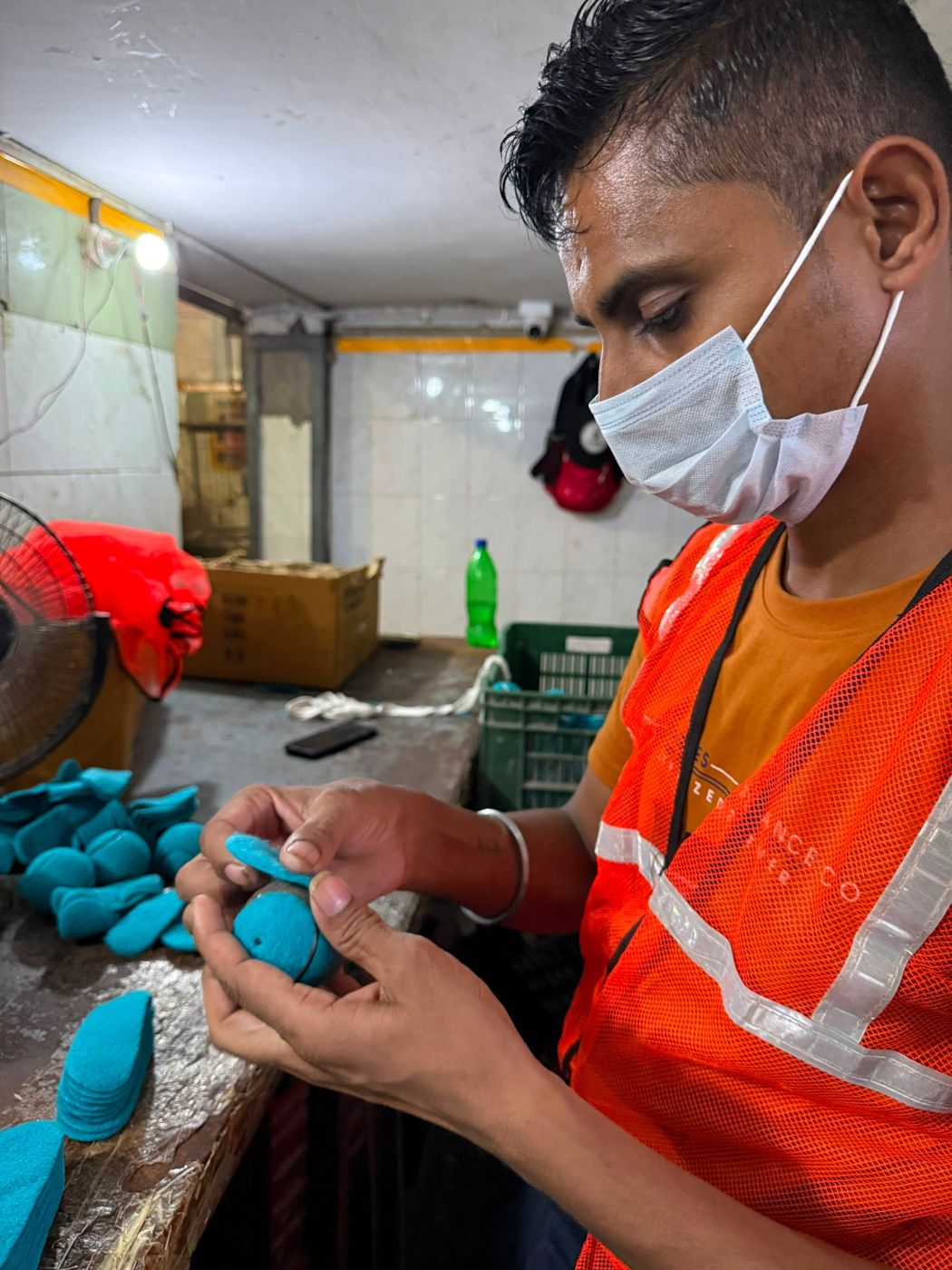
Felt pasting
Each core is covered with felt by hand. A team of about 25 people, each covering around 1,000 balls a day.
07
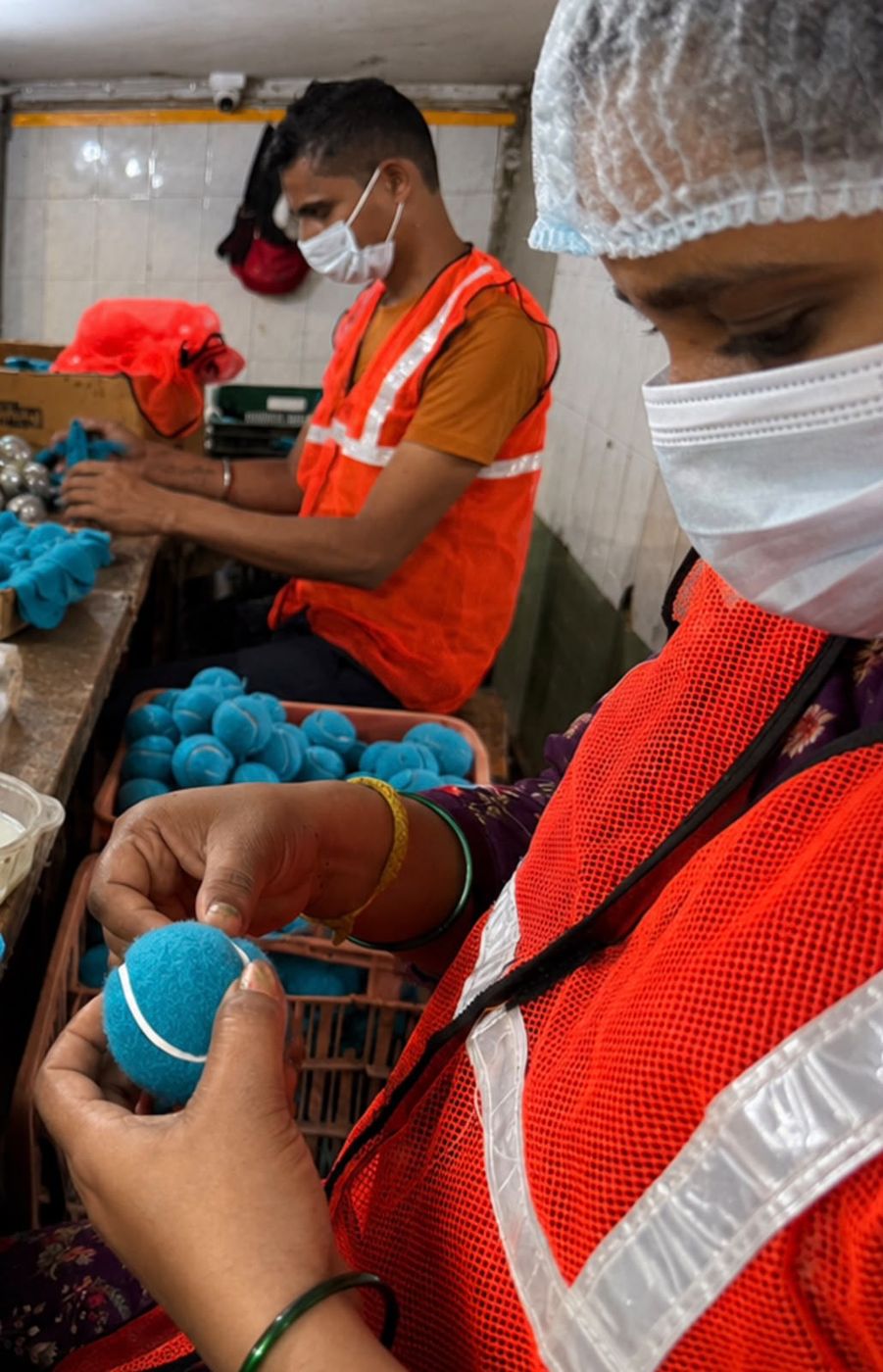
White rubber seam
The white rubber layer is applied by hand in the gaps between felt panels, forming the familiar seam.
08
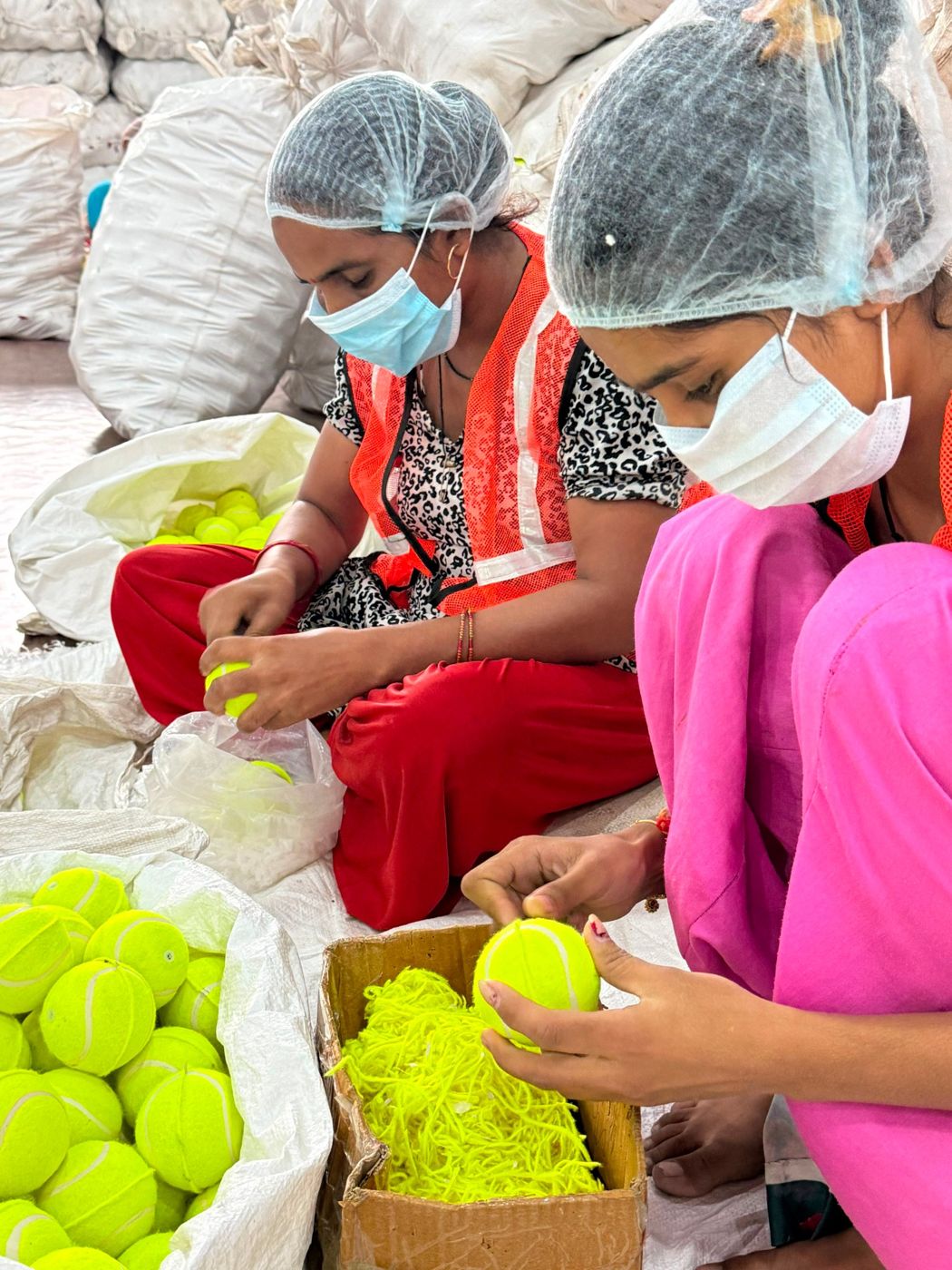
Steam forming & ridge trimming
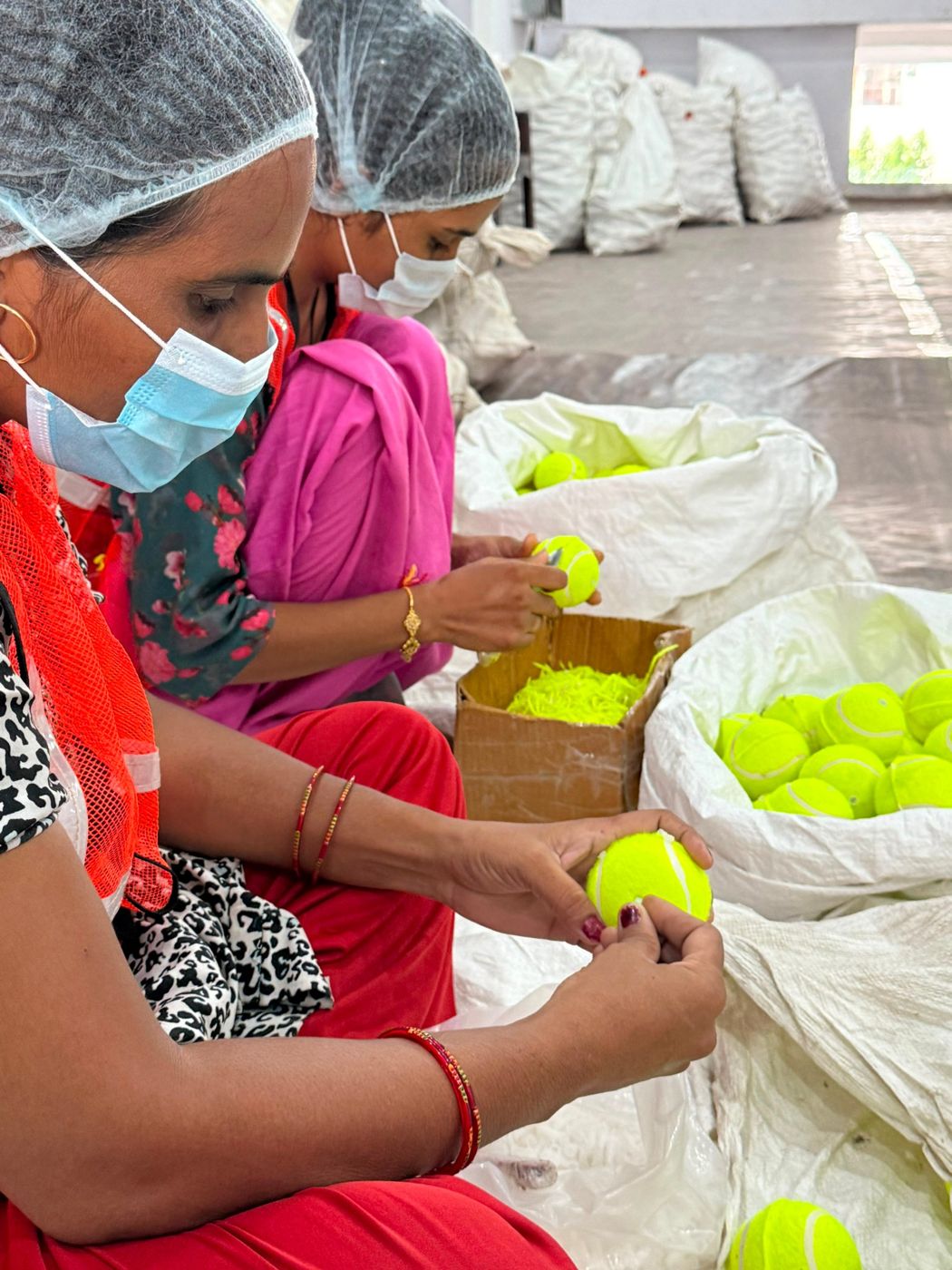
Balls are steamed in molds to complete forming. Any extra felt ridges are trimmed by hand.
09
Squeaker insertion & packing
For squeaky balls, the squeaker goes in through the engineered port. Then final inspection, metal detection and packing.